Pillow Covers and Inserts: How to Choose the Right Size
Nov 09, 2026
Pillow Covers and Inserts: How to Choose the Right Size
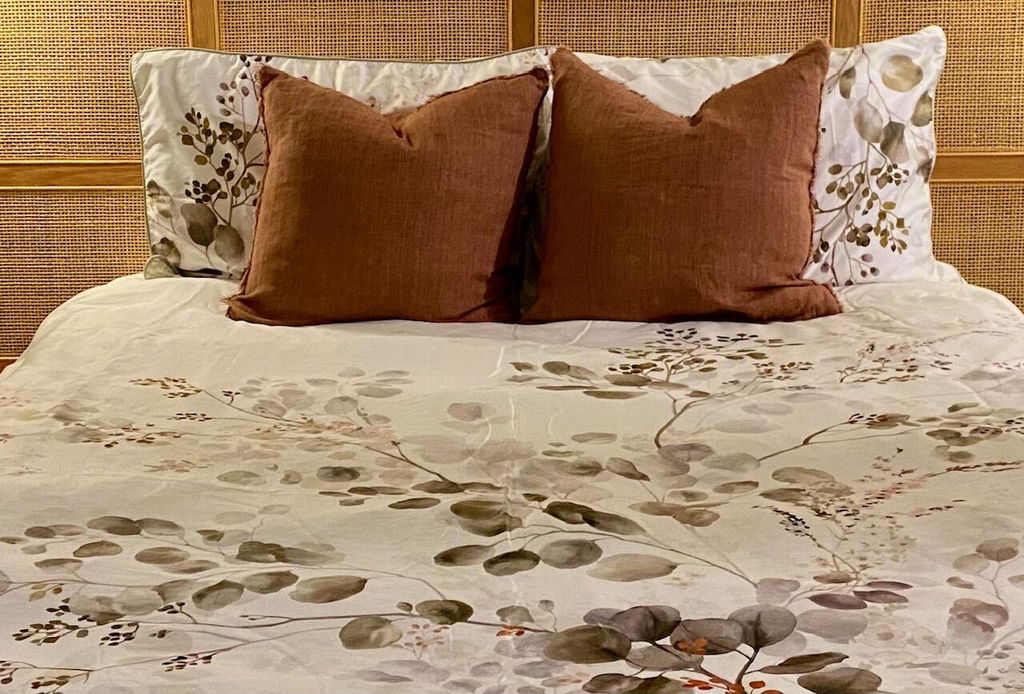
Picture a beautiful pillow cover on a sofa, but the corners sag and the middle sits flat, like a pillowcase with a cushion rattling around inside. Now picture the same cover with an insert that fills it properly: crisp corners, a soft rounded top, a shape that looks plumped even after someone leans on it. The difference is almost always the size of the insert, and it's an easy thing to get right.
What is a pillow cover, and why do so many people prefer them?
A pillow cover is the decorative outer layer of a throw pillow, with an opening so the insert can slide in and out. The cover brings the colour, texture and pattern. The insert brings the shape.
Keeping those two jobs separate is what makes covers so practical. You can change the look of a room without buying a whole new pillow: a linen cover in spring, something richer and softer in velvet when the weather turns. The cover can also be cared for on its own, so you're never fussing with the insert just to freshen the fabric. And if you're building a collection slowly, one cover at a time, your inserts can simply move from one cover to the next.
You'll also see them called cushion covers. Throw pillow covers, cushion covers and decorative pillow covers all mean the same thing.
How do you size an insert for a pillow cover?
Choose an insert about one inch larger than the cover. A 20x20 cover wants a 21x21 insert, not a 20x20.
The reason is simple. Fabric has no give at the corners, and an insert the exact size of the cover leaves those corners empty, so the pillow looks flat and a little tired. An insert slightly larger pushes the filling into the corners and gives you the full, plump look. Going much bigger than an inch can strain the seams and make the cover harder to close, so one inch is a good place to start.
Here's how that works for the cover sizes where we list a matching insert online:
| Cover size | Insert size that suits it |
|---|---|
| 20x20 pillows | 21x21 |
| 16x24 pillows | 17x25 |
| 21x12 lumbar pillows | 13x22 |
For the 24x24 pillows and the 14x31 long lumbar pillows, check the inserts collection for what's currently available, since we'd rather you see what's there than guess at a size.
A quick practical note: measure your cover flat, seam to seam, and compare that with the insert's stated size. Stated sizes are a good guide, but handmade pieces can vary slightly, so that one-inch rule is a starting point rather than a promise to the millimetre.
Which cover size suits which spot?
The 20x20 is the easiest all-rounder for sofas and chairs. The 24x24 is a bigger, softer statement, lovely at the back of a bed or against the arm of a deep sofa. The 16x24 sits somewhere between a square and a lumbar, and the 21x12 lumbar and 14x31 long lumbar are the ones to reach for when you want a lumbar pillow across the centre of a bed or a snug bench seat.
What should you look for in a pillow insert?
Fill matters as much as size. A generous fill is what keeps a pillow looking full from the first day, which is why we sell pillow covers on their own, with the option to add a premium feather down insert.
Our premium feather down inserts are made in Canada in partnership with Canadian Down & Feather. They're certified to the Responsible Down Standard (RDS), CIDS and OEKO-TEX Standard 100, and they're generously filled so the pillow looks full rather than flat. Our pillow covers themselves are handmade in India.
If you're shopping for throw pillows in Canada and weighing down against a synthetic fill, think about how you use the pillow. A feather down insert has a soft, sink-in quality that you can shape with your hands. It's a lovely fit for the sofa pillows you lean on and fluff every day.
Which fabric should you choose for your pillow cover?
Fabric sets the mood, so it's worth thinking about it alongside size. All of our pillows are handmade and crafted in India by artisans, which means small variations in print, stitching and colour are part of the look. No two are identical, and that's the charm of them.
Linen
Our Lina Linen pillows use Belgian-sourced linen that's handwoven in India and enzyme washed for a soft, lived-in finish. It looks relaxed from the start, and it layers easily with almost anything. If you're searching for linen pillows that feel easy and lived-in, this is where we'd begin.
Hand block print
Block-printed covers bring pattern without feeling fussy. Because the print is done by hand, you'll see small differences in how the design lands on the cloth. Those little irregularities are a good thing.
Hand embroidered
Embroidered pillows add texture you can see and feel. It's the cover to choose when you want a pillow to have a bit of dimension, and it looks especially good against a plain sofa.
Velvet
Velvet has a depth of colour that changes with the light. It's a natural choice for autumn and winter, and it pairs well with linen when you want to mix surfaces.
How should you care for a pillow cover?
Follow the care instructions on each product page. Fabrics differ, and the right approach for a velvet cover isn't necessarily the right one for linen or embroidery. Because the cover and insert are separate, you can look after the cover on its own whenever it needs it.
How many pillow covers should you put on a sofa or bed?
Two or three covers suit a loveseat or one end of a sofa. A bed can take more, usually with the larger squares at the back and the lumbar in front. Our guide to how to style throw pillows goes through arrangements in more detail, and our decorative pillows guide to fabric, size and styling is helpful if you're still deciding on a mix.
Once you've found a cover you love, pair it with an insert one inch larger and give it a good shake. You can browse all of our handmade throw pillows whenever you're ready, and we hope you find the one that makes your sofa feel like yours.